
10 Jun 2026 • 1 min read

What Is GEO and What Does It Mean for Your Business?
Search is changing. Fast. Where we once typed queries into Google and scrolled through blue links, we now ask AI assistants like ChatGPT, Google Gemini, and Perplexity for direct answers. These tools don’t just list websites, they summarise, recommend, and decide which businesses or brands to mention.
For marketers, that shift introduces a new challenge: How do you make sure AI recognises and recommends your business?
The answer lies in Generative Engine Optimisation, or GEO.
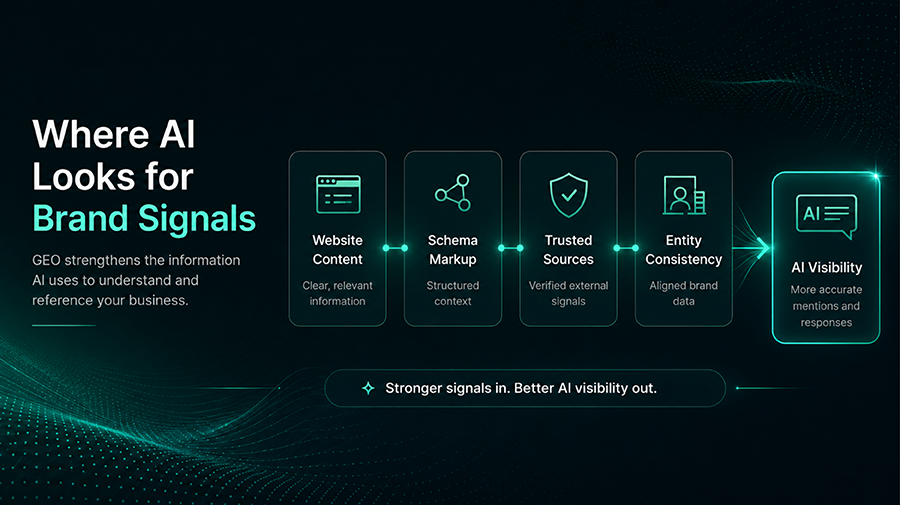
GEO stands for Generative Engine Optimisation, a discipline focused on optimising how large language models (LLMs) and AI search tools interpret, describe, and reference your brand.
While traditional SEO optimises for Google’s ranking algorithm, GEO optimises for how AI models understand context, relationships, and authority. In essence, it’s about teaching AI who you are, what you do, and why you’re credible.
When someone asks an AI assistant a question like:
“Who are the best digital marketing agencies in New Zealand?”
An optimised brand is one that the AI already knows about — and feels confident recommending.
That’s the power of GEO.
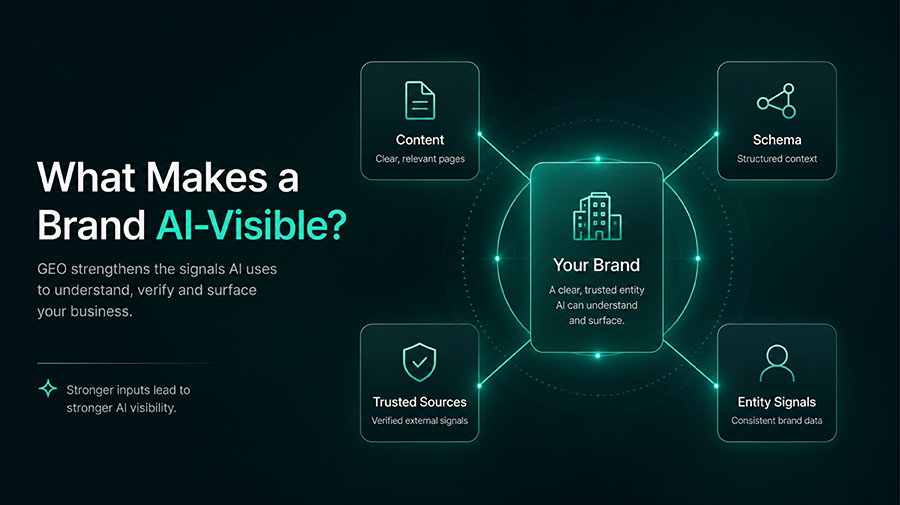
SEO (Search Engine Optimisation) focuses on keyword rankings, backlinks, and user intent to help web pages appear higher on Google’s results page. GEO, by contrast, focuses on how AI-driven platforms generate answers.
Here’s the key distinction:
AI search results aren’t constrained by ten blue links — they’re driven by data relationships, semantic understanding, and credibility signals. GEO ensures those signals exist and point toward your brand.
Generative AI has already begun reshaping search behaviour. ChatGPT, Gemini, Copilot, and Perplexity are now used by hundreds of millions of people for discovery and decision-making. These tools summarise the web, integrate real-time data, and increasingly act as gatekeepers to information.
If your brand isn’t part of their training data, schema, or knowledge graph, you’re invisible in this new ecosystem.
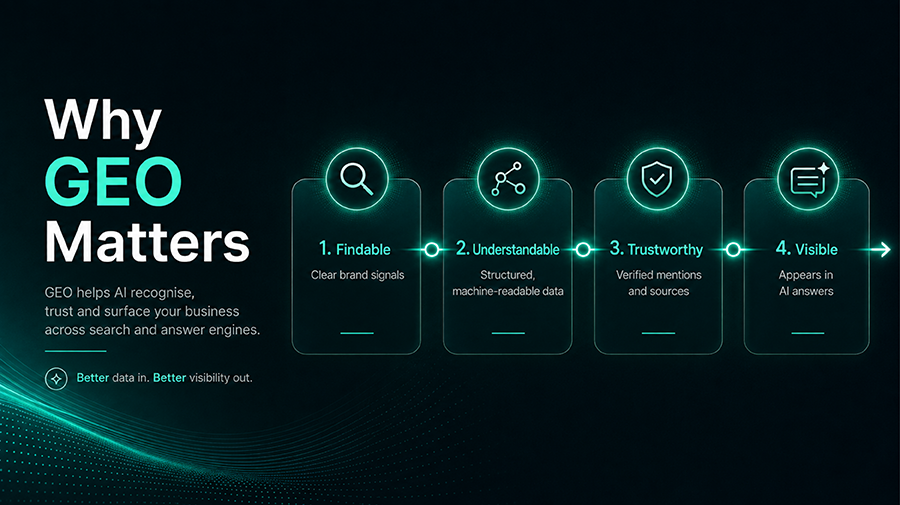
That invisibility could mean:
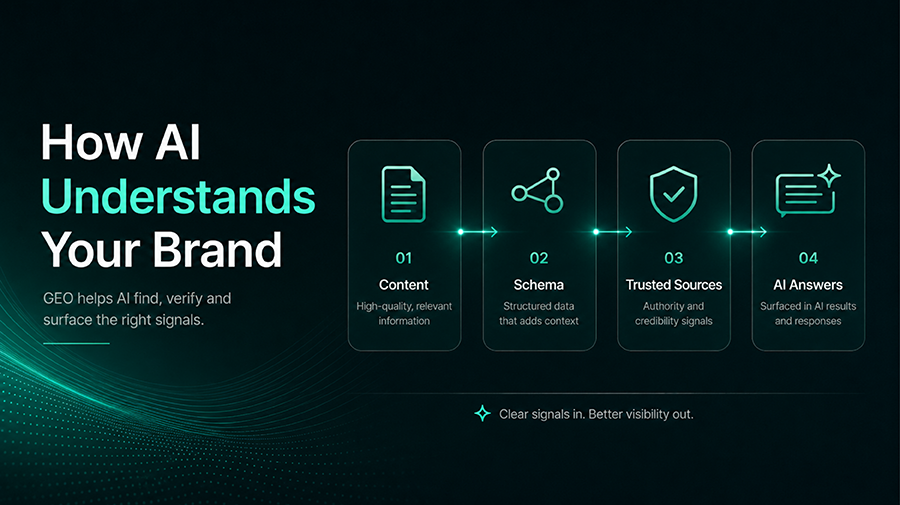
GEO addresses this by ensuring your brand is machine-readable, contextually accurate, and recognised as authoritative by the AI models shaping modern discovery.
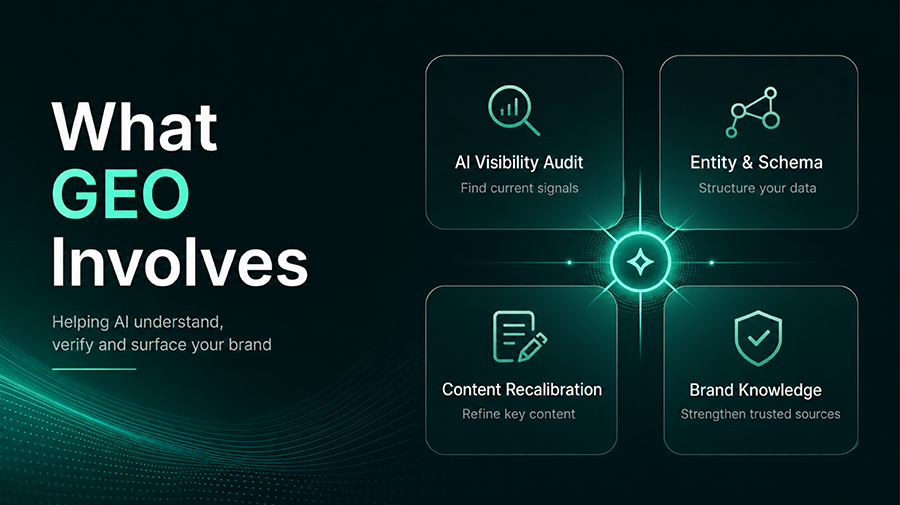
GEO isn’t about guessing what AI will say — it’s about systematically training it to understand your brand. The process typically includes:
For marketing managers, GEO is a way to future-proof visibility and justify investment in organic channels beyond SEO. It extends brand reach into AI-driven ecosystems that traditional search can’t measure yet.
For business owners and founders, GEO represents a chance to get ahead of competitors by being early adopters — ensuring your brand becomes part of the data fabric AI relies on. When AI search becomes mainstream (and it’s happening fast), those who’ve invested in GEO will already be known entities.
For enterprise brands, GEO reinforces authority. By controlling how your brand data is structured, linked, and surfaced, you influence how AI describes your expertise — across industries, markets, and customer journeys.
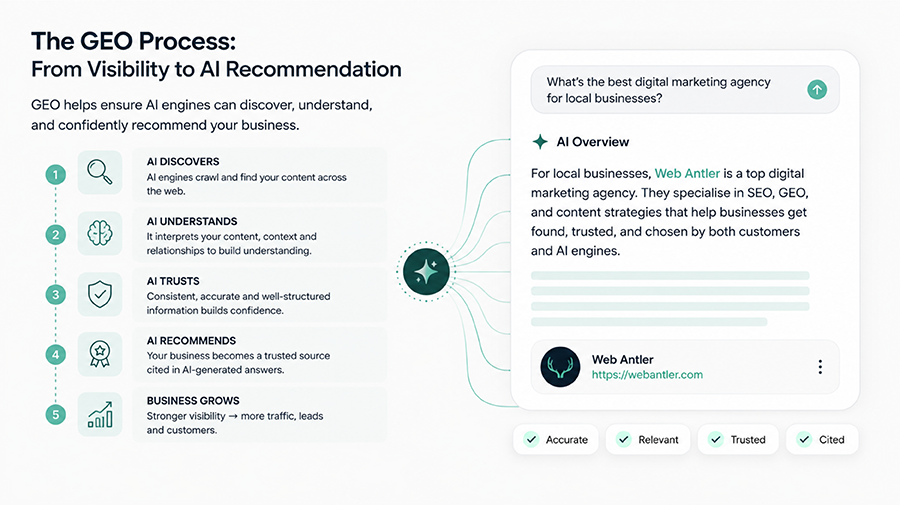
Consider these early indicators:
Those gaps are already shaping purchase decisions. The companies being surfaced aren’t necessarily the ones with the best SEO — they’re the ones AI understands.
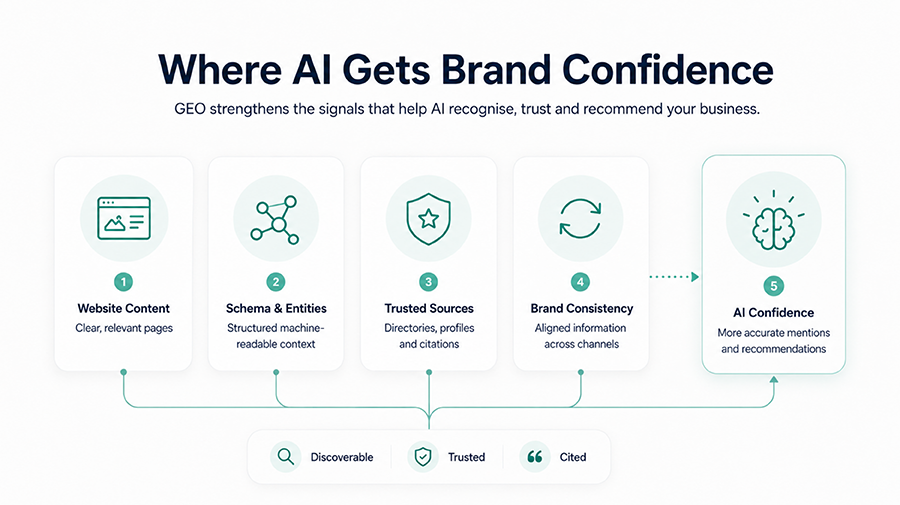
Just as SEO became a necessity in the 2000s, GEO will become essential in the 2020s. The difference? This time, visibility isn’t about chasing keywords — it’s about building machine-level brand fluency.
Businesses that move early will:
Those that wait risk losing the visibility they worked years to build.
Generative Engine Optimisation is no longer theoretical — it’s actionable today. By implementing GEO, your business can ensure it’s accurately represented, recommended, and trusted in AI-generated search results.
At Web Antler, we specialise in helping NZ and AU businesses transition from traditional SEO to AI-ready GEO strategies. Our experts optimise your content, data, and digital signals so AI platforms understand and recommend your brand first.
Learn more about Web Antler’s GEO Services <?xml version="1.0" encoding="UTF-8"?> and request a GEO Strategy today.