
24 Jun 2026 • 7 min read

ChatGPT Ads NZ
ChatGPT Ads are sponsored placements that can appear below ChatGPT responses when they are relevant to the user’s conversation. For NZ businesses, they create a new way to reach people while they are researching, comparing options and making decisions, not just after they have searched on Google or seen a social media ad. As an official ChatGPT provider, Web Antler can promote your brand on ChatGPT.
People are no longer only using just Google to find answers. Consumers are now preferring AI Tools.
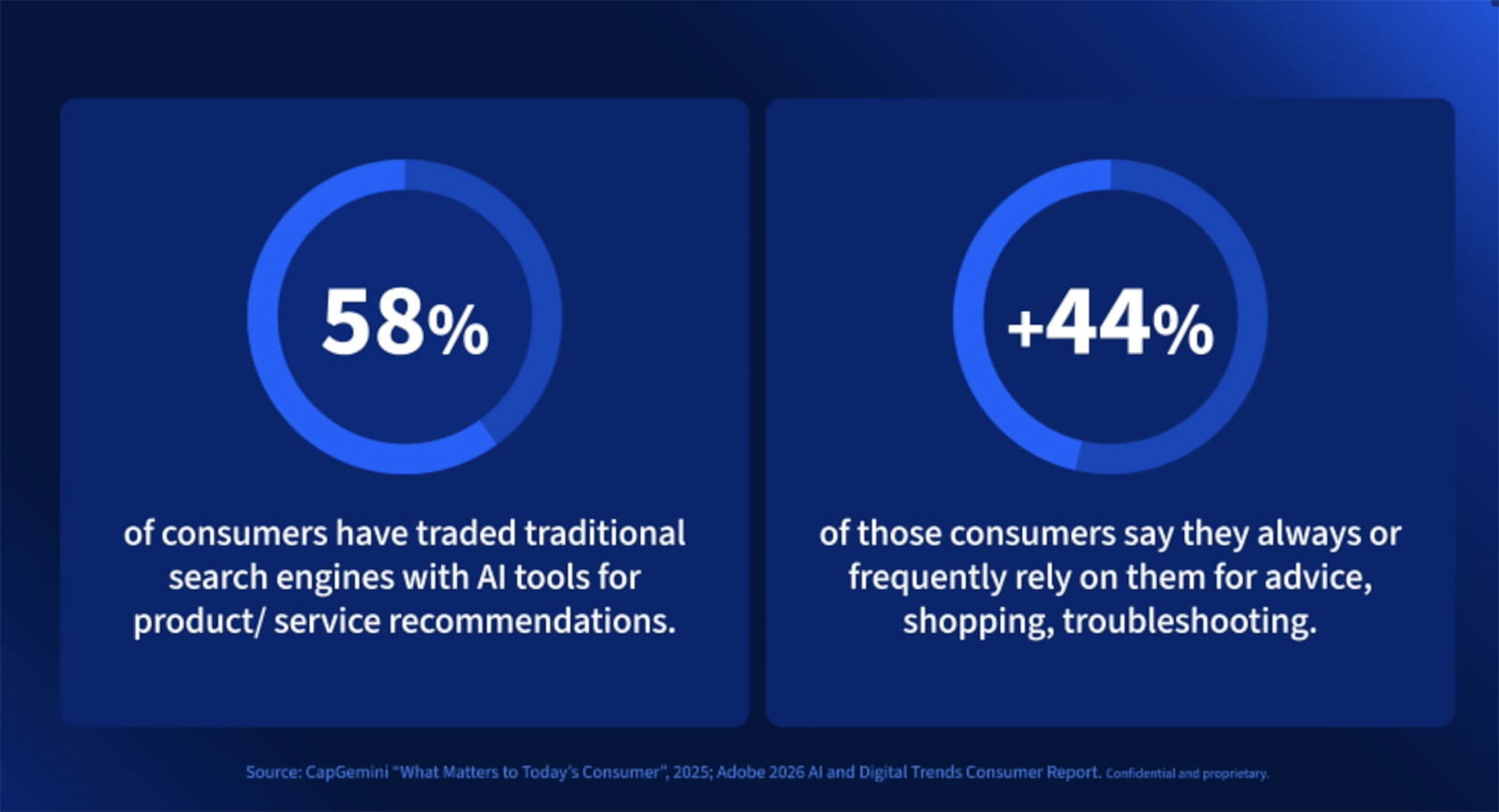
They are asking ChatGPT for recommendations, comparisons, ideas, product options, service providers and practical next steps. Instead of typing a short keyword like “best accountant Auckland” or “home ventilation NZ”, they are asking detailed questions such as:
“What’s the best type of home ventilation system for a damp house in New Zealand?”
“Which CRM would suit a small service business with three salespeople?”
“What should I look for when choosing a digital marketing agency?”
That shift matters.
ChatGPT Ads give businesses a new way to appear while people are actively exploring options, comparing choices and making decisions. For small and medium-sized New Zealand businesses, this opens up a fresh advertising opportunity that sits somewhere between search, social and AI-powered discovery.
At Web Antler, we can now help businesses plan, set up and optimise ChatGPT Ads as part of a broader digital marketing strategy.
ChatGPT Ads are sponsored placements that can appear inside ChatGPT when they are relevant to the conversation a user is having.
They are not the same as traditional search ads.
With Google Ads, someone usually types a keyword. With Meta Ads, someone may see an ad while scrolling. With ChatGPT Ads, the opportunity is different: the user is often in the middle of a deeper research or decision-making process.
For example, someone might ask ChatGPT:
“What are the best options for improving staff uniforms for a growing trade business?”
“Which project management tools are best for a small creative agency?”
“How do I choose a reliable roofing company?”
“What should I consider before buying a spa pool in New Zealand?”
In those moments, the person is not just casually browsing. They are trying to solve a problem, compare options or decide what to do next.
That is where ChatGPT Ads become powerful.
Are ChatGPT Ads the same as being recommended by ChatGPT?
No. ChatGPT Ads are paid sponsored placements. They are separate from ChatGPT’s main response and are clearly labelled as sponsored content.
This is different from organic AI visibility, where your business may be mentioned or recommended because your website, brand, content, reviews and third-party signals make you a relevant answer.
In simple terms:
- ChatGPT Ads help your business appear as a sponsored placement.
- GEO / AI search optimisation helps improve your chances of being found, understood and referenced organically by AI tools.
For the best result, businesses should think about both.
The biggest opportunity with ChatGPT Ads is context.
Traditional advertising often relies heavily on keywords, interests or audience data. ChatGPT Ads can be matched to the context of the conversation. That means the ad can be more closely aligned with what the person is actually trying to understand or solve at that moment.
For businesses, this creates three major benefits.
Not every customer is ready to buy immediately.
Some are still trying to understand the problem. Some are comparing different approaches. Some are looking for trusted providers. Others are almost ready to take action but need confidence before they do.
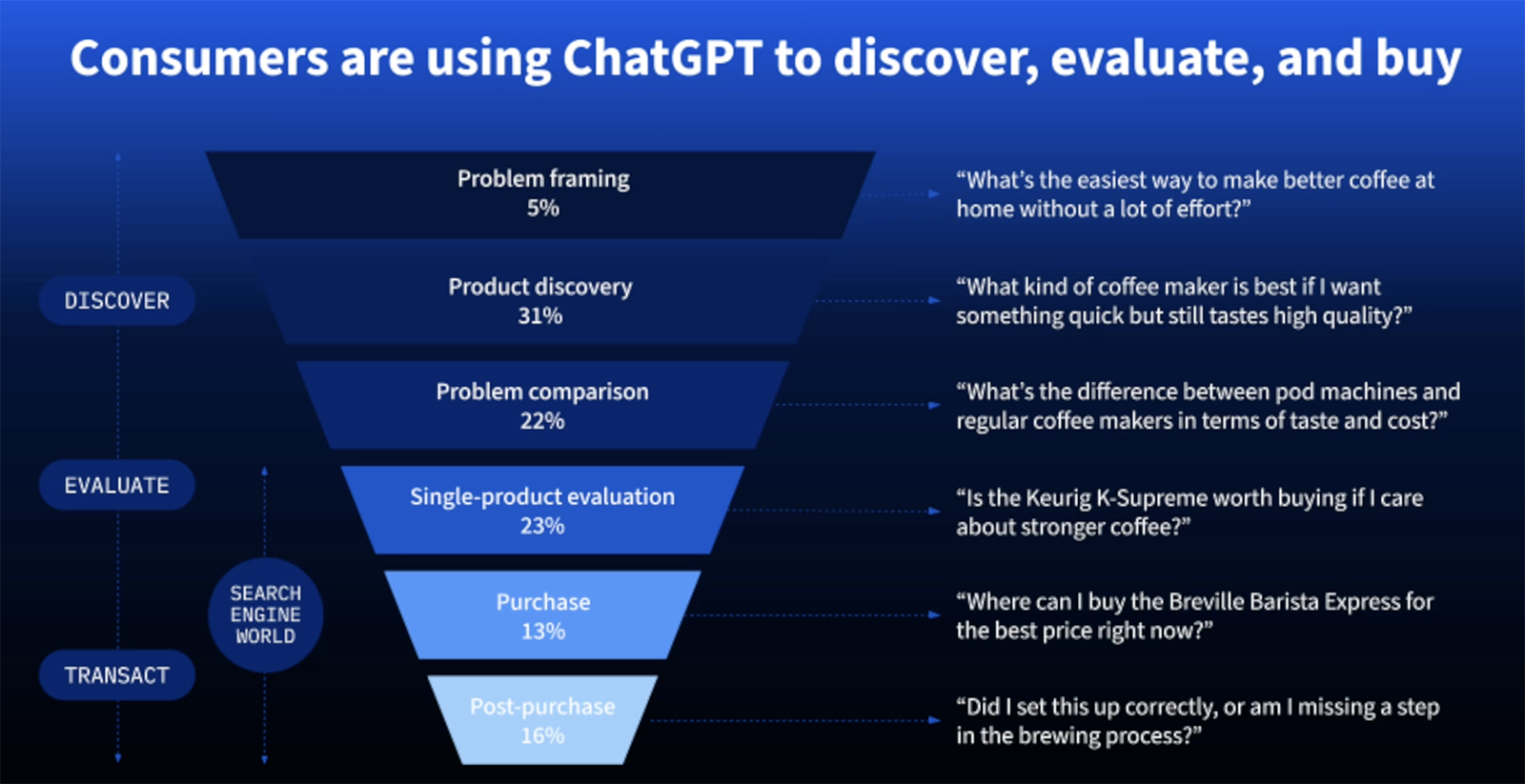
ChatGPT is being used across all of those stages.
A customer might start by asking a broad question, then narrow their options, then compare providers, then ask what to do next. ChatGPT Ads give businesses the potential to show up during that process, not just at the final “ready to buy” moment.
A keyword can only tell you so much.
Someone searching “business insurance” could be a startup, a sole trader, a growing company, or someone trying to understand a policy renewal. In ChatGPT, people often provide more context. They explain their situation, their budget, their needs, their concerns and what they are trying to achieve.
That richer context can help ads become more relevant.
For New Zealand businesses, this is especially useful because customers often have specific local needs. They may be looking for local service providers, NZ-based support, industry experience, fast delivery, compliance understanding or advice that fits our market.
Like any new advertising channel, the early phase is often where smart testing creates an advantage.
Many businesses are still focused only on Google, Meta, LinkedIn and email. Those channels still matter, but customer behaviour is changing. People are increasingly using AI tools to research products, compare services and make more informed decisions.
Businesses that test ChatGPT Ads early can start learning what messages work, what prompts and customer needs matter, and how this channel fits into their broader marketing mix.
ChatGPT Ads are designed to be clearly labelled as sponsored content.
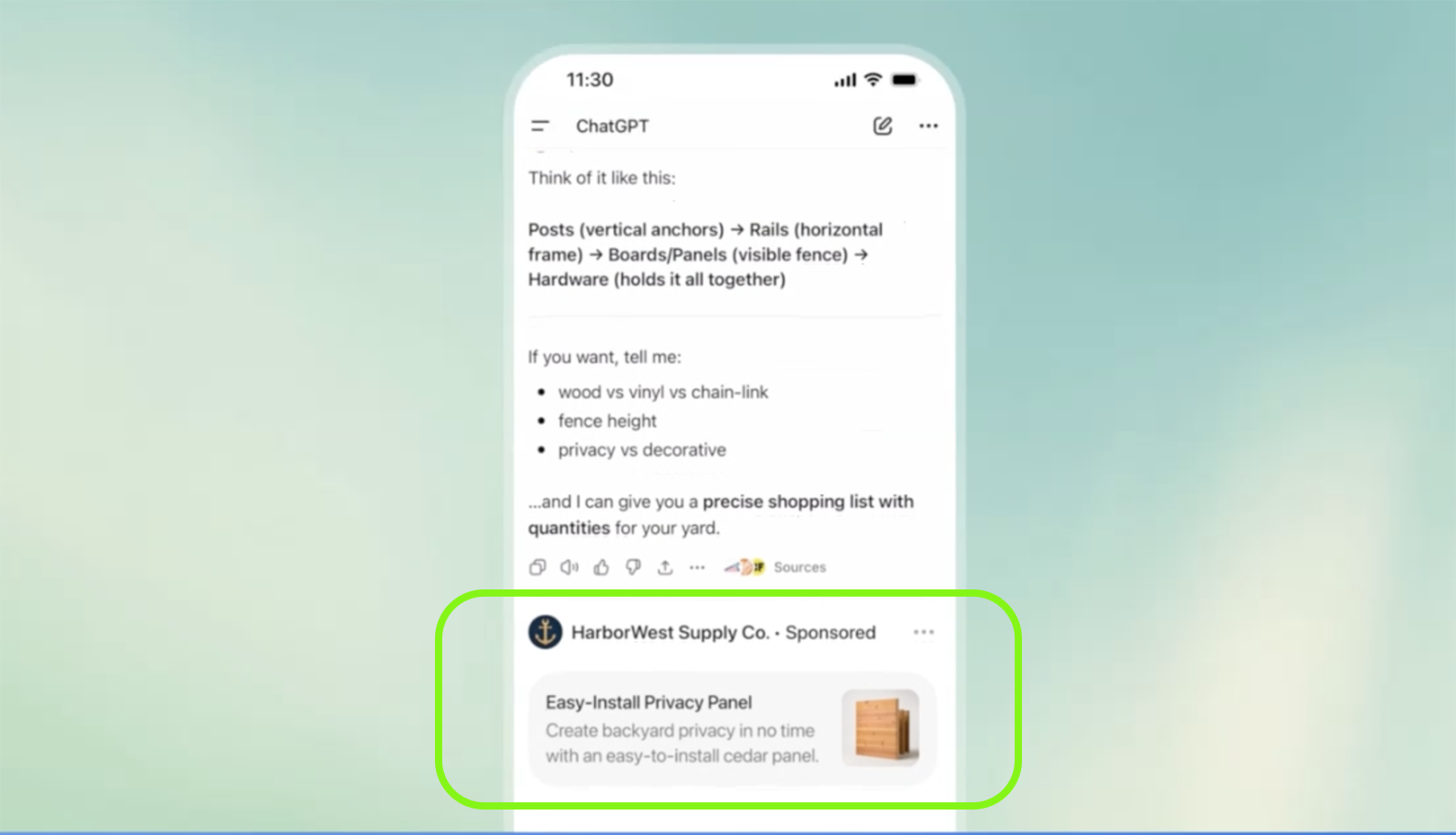
They are separate from ChatGPT’s answer and are intended to appear only when relevant to the conversation. The current format is simple: an advertiser can provide creative such as an image, headline, description and landing page URL.
That simplicity is important.
The goal is not to interrupt the user with a flashy ad. The goal is to be useful and relevant in the moment. A good ChatGPT Ad should feel like a helpful next step, not a random sales message.
Google Ads are powerful because they capture demand when people search.
Meta Ads are powerful because they create demand while people scroll.
ChatGPT Ads sit in a different space. They can reach people while they are thinking, researching, comparing and asking for guidance.
That makes them especially interesting for businesses where the buying decision involves education, trust or comparison.
For example:
The key difference is intent. ChatGPT conversations often reveal what the person is trying to achieve, not just what they typed into a search box.
ChatGPT Ads may be especially useful for businesses where customers ask questions before they buy.
This could include:
There will also be some categories that require more care, especially regulated industries such as finance, healthcare and legal services. For these businesses, ad eligibility and messaging need to be handled carefully.
ChatGPT Ads should not be treated like a standard display campaign.
The strongest approach is to think about the customer’s conversation.
What questions are they asking?
What problems are they trying to solve?
What comparisons are they making?
What concerns do they need answered before they enquire or buy?
From there, the campaign should be built around specific themes and use clear, useful ad variations.
For example, instead of one generic ad saying:
“Quality office furniture for NZ businesses”
A stronger set of ChatGPT Ads might speak to different customer needs:
“Setting up a new office? Find ergonomic desks and chairs delivered NZ-wide.”
“Need office furniture for a growing team? Explore practical fit-out options.”
“Unsure which office chair is right? Compare ergonomic options for everyday work.”
Each version speaks to a different conversation. That is the point.
ChatGPT Ads reward relevance. The better the ad matches the user’s need, the more useful it becomes.
One of the biggest learnings from early ChatGPT Ads testing is that creative strategy matters.
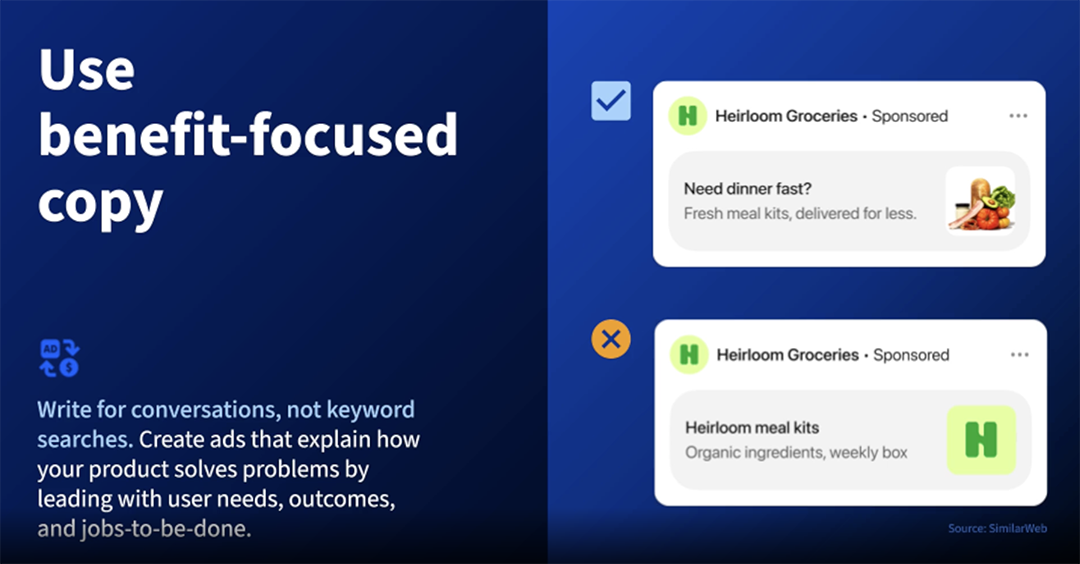
Because people ask ChatGPT such a wide range of questions, a single generic ad is unlikely to cover every useful opportunity. Businesses need different ad angles for different customer situations.
That might include variations based on:
This does not mean every business needs thousands of ads from day one. It does mean campaigns should be structured for testing. The goal is to learn which messages match real customer conversations and then scale the ones that work.
ChatGPT Ads are not just about the ad itself.
The landing page needs to match the promise in the ad. If someone clicks from a specific conversation, they should land on a page that continues that journey.
For example, if the ad is about “CRM software for small service businesses”, the landing page should not send them to a generic homepage. It should explain the CRM offer, who it suits, what problems it solves, and what the user should do next.
This is where many campaigns win or lose.
A relevant ad can get the click. A clear landing page turns that click into an enquiry, booking, sale or lead.
Web Antler can help New Zealand businesses test and use ChatGPT Ads properly, rather than treating them as a novelty.
Our approach includes:
The goal is not to run ads for the sake of being on a new platform. The goal is to find out where ChatGPT Ads can create meaningful visibility, traffic and leads.
As exciting as ChatGPT Ads are, they should not replace the fundamentals.
Your website still needs to be clear.
Your offer still needs to be compelling.
Your tracking still needs to work.
Your brand still needs to build trust.
Your SEO, Google Ads, social ads and email activity still matter.
The opportunity is to add ChatGPT Ads into the mix in a smart way.
For many businesses, this will mean using ChatGPT Ads to reach people during the research and comparison phase, then using other channels such as remarketing, email, Google Ads and SEO to keep building trust and drive action.
If your customers ask questions before they buy, ChatGPT Ads are worth considering.
That does not mean every business should rush in with a large budget. A sensible starting point is to test a clear campaign theme, build relevant ad variations, send traffic to a strong landing page and measure what happens.
For small and medium-sized NZ businesses, the opportunity is simple:
People are already using ChatGPT to make decisions. ChatGPT Ads give your business a way to show up in those moments.
If you want to understand whether ChatGPT Ads are right for your business, Web Antler can help you assess the opportunity, build the strategy and launch a campaign with the right tracking and optimisation in place.
ChatGPT Ads are new and available through Web Antler now. The benefits are clear, AI is becoming part of how people discover, compare and choose businesses.
The businesses that learn early will be better placed as the channel matures.
If you are interested in advertising on ChatGPT, Web Antler can help you get started with a practical, performance-focused approach built for the New Zealand market. Contact us about ChatGPT Advertising today.